
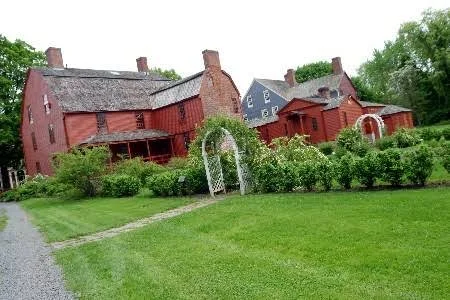
The Webb-Deane-Stevens Museum includes four historic homes and is operated by the National Society of Colonial Dames of America in the State of Connecticut, a preservation organization founded by Elizabeth Hart Jarvis Colt in 1893. Colt was a devoted preservationist whose leadership helped ensure that important sites connected to Connecticut’s history would be protected and interpreted for future generations. Through her vision and commitment, the organization became a significant force in historic preservation, and the museum continues that legacy by highlighting the lives, labor, and influence of women in early American history.
The Webb and Deane Houses offer a window into the world of colonial elite society. Joseph and Abigail Webb welcomed distinguished guests and hosted important meetings between George Washington and French General Rochambeau. Elizabeth Deane also played an active role in managing her household and entertaining visitors while her husband, Silas, served as a diplomat and delegate to the Continental Congress. She received John Adams for tea in 1774 and George Washington for dinner in 1775.
The Stevens and Buttolph-Williams Houses tell the story of middle- and working-class life in the 18th and 19th centuries. The Stevens House offers an intimate look at daily life in a household managed by women and not supported by servants or enslaved labor, while the second floor interprets the lives of 19th-century children. The Buttolph-Williams House, once home to an early 18th-century tavern run by a husband-and-wife team, now features an impressive collection of 18th-century American decorative arts. It also inspired Elizabeth George Speare’s classic novel The Witch of Blackbird Pond, still widely used in schools today.